
On the afternoon of 2 December 1899, the cheers echoing across the football grounds of Leicestershire carried a somber undertone. This was “Football Saturday,” a nationwide day of coordinated charity matches designed to raise funds for the Army Reserve Relief Fund. At the time, the Second Boer War was beginning to take a devastating toll, and the local football community—from the professional ranks of Leicester Fosse to the amateur clubs of Loughborough—stepped up to support the families of those called to the front. However, for many of the men involved in organizing those very games, the war was not just a cause for charity; it was a final destination.
The statistics of the Second Boer War are staggering, with 22,092 British soldiers killed, 75,430 returning home sick or wounded, and 934 missing. Behind these numbers lie the stories of local men who were integral to the birth of organized sport in the county. Two names, in particular, bridge the gap between the goalposts and the battlefield. William Tempest Cockain was a true pioneer of Loughborough Town FC. In the early 1890s, Cockain was the ultimate clubman, juggling the duties of captain, trainer, and secretary for a mere £10 per year. He was the backbone of the club during its formative years. Alongside him in the annals of sacrifice was D.D. Stewart, the former secretary of St. Mary’s Victor FC, a man who spent his weekends managing the logistics of local amateur football before answering the call to serve. Neither man would return to see the Leicestershire football scene flourish in the new century.
The war they fought in, lasting from 11 October 1899 until 31 May 1902, was a brutal struggle between the British Empire and the Afrikaans-speaking Dutch settlers of the South African Republic and the Orange Free State. It was a conflict defined by grueling sieges and controversial tactics. The 1st Battalion of the Leicestershire Regiment served throughout the entire conflict, most notably helping to defend Ladysmith during the famous siege of 1899–1900, before joining the campaign in the Orange Free State. It was a war that saw a young Winston Churchill captured and famously escape, and one where the British military’s use of concentration camps eventually weakened Boer resistance, leading to the annexation of the republics and the eventual formation of the Union of South Africa in 1910.
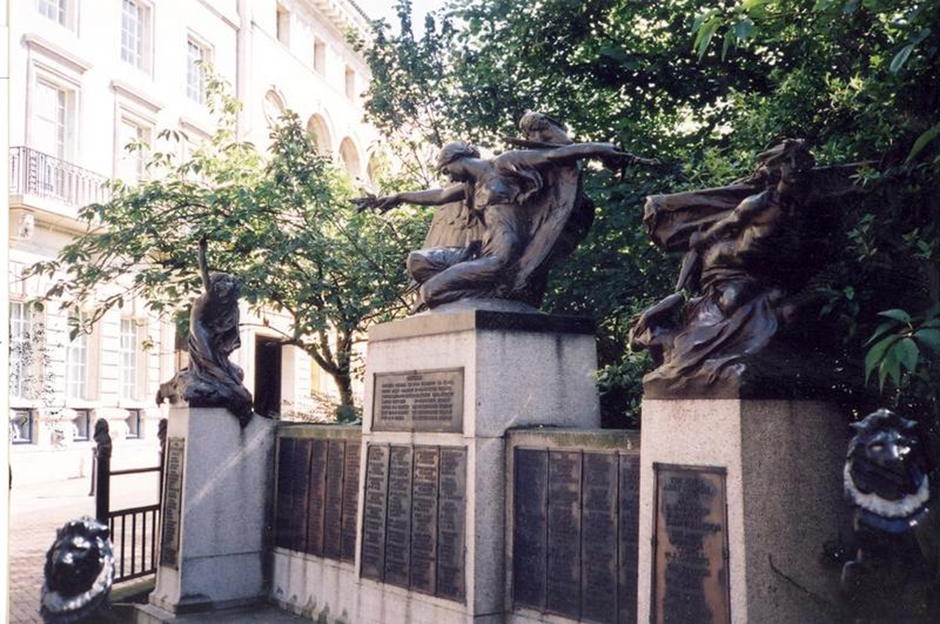
Today, the legacy of Cockain, Stewart, and their comrades is not found on the pitch, but in the heart of the town center. On the corner of Town Hall Square, at the junction of Every Street and Horsefair Street, stands the Leicester South African (Boer) War Memorial. Funded by local subscriptions and unveiled on 1 July 1909 by Field Marshal Lord Grenfell, the memorial features bronze panels listing the names of over 300 Leicestershire soldiers who perished in the conflict. As we look back at the “Football Saturday” of 1899, we see more than just a fundraising drive. We see a community rallying for their own, honoring men who gave their lives for their country after spending their best years building the beautiful game in the heart of England. The bronze panels remain a silent witness to the cost of war, ensuring that the names of footballing pioneers like Cockain and Stewart are never forgotten by the town they served.