
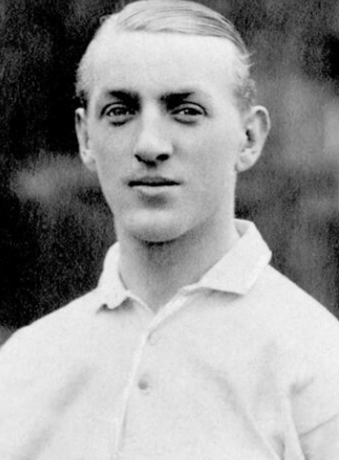
In the rich tapestry of English football, some names shine brighter, while others, though foundational, reside in quieter corners. Thomas “Tommy” Clay is one such figure – the first player born in Leicester to play for the England national team, a pioneering achievement in the county’s football history.
Born in Leicester on November 19, 1892, Clay’s journey began with local youth teams before Leicester Fosse signed him in April 1911. He debuted for the Fossils later that year, showing early promise. His undeniable talent led to a pivotal move in 1914; after an impressive FA Cup tie against Tottenham Hotspur, both Clay and teammate Harry Sparrow were immediately snapped up by Spurs. This marked the start of Clay’s remarkable 15-year career at White Hart Lane, where he became a true club legend.
Clay’s time at Tottenham was defined by immense dedication and consistent performances. A resolute and intelligent full-back, he was renowned for his impeccable tackling. He played for Spurs throughout the First World War, participating in 107 friendly matches. Post-war, his leadership qualities shone through when he was made club captain in 1920, guiding Spurs to the Second Division title. In March 1921, he even kept a clean sheet as a stand-in goalkeeper in a 1-0 victory over Sunderland. Later that same year, he played a vital role in their 1921 FA Cup triumph. He continued to play for Tottenham, amassing 318 League appearances (23 goals) and 33 FA Cup matches (1 goal), until May 1929.
The Unforgettable Own Goal and National Recognition
It was during this golden era at Tottenham that Clay earned the ultimate accolade: representing his country. Between 1920 and 1922, Tommy Clay earned four caps for the England national team, debuting on March 15, 1920, against Wales at Highbury, and playing his last on April 8, 1922, against Scotland. As the first Leicester-born player to achieve this feat, it was a significant moment, solidifying his unique place in the city’s footballing heritage.
Yet, Clay’s career also held a moment of profound heartbreak. In a 1920 FA Cup fourth-round tie, during Tottenham’s confident march towards the final, he suffered a footballing tragedy. Standing 30 yards from goal, Clay attempted to clear a loose ball but miscued it, sending it high, fast, and swerving into his own net. This solitary goal knocked Spurs out of the cup. Visibly distraught, Tommy broke down after the final whistle and reportedly vowed never to kick a ball again.
However, a testament to his character and reputation, no one blamed him – least of all his teammates. Crucially, the FA Selection Committee felt the same way, choosing him for the England-Wales international just weeks later. The following season proved to be Clay’s redemption: he earned three more England caps and secured that coveted FA Cup winner’s medal with Spurs.

Beyond the pitch, Clay’s sporting passion extended to cricket, even trialling for Leicestershire County Cricket Club in 1923. He later transitioned into coaching, becoming player-coach at Spurs’ nursery club Northfleet in May 1929. In August 1930, he was appointed coach of the newly formed amateur team, Bedouins, and in the 1931–32 season, he coached St Albans City. Though he passed away almost “unmourned” on February 21, 1949, aged 56, having spent his final years as a bricklayer in Southend, his legacy as a prominent Leicester international footballer, a true professional, and a key figure in Tottenham Hotspur’s early successes, remains.