
The amazing photo below of the Loughborough football team 1962-1963 features Barry Hines, Bob Wilson and Dario Gradi. Also pictured are Ted Powell (who coached an England Under-18 side featuring Man Utd’s ‘Class of 92’), Keith Blunt (coach at Malmö and Spurs), and former Crewe player Alan Bradshaw .

In the grainy, monochrome history of British sport, some photographs capture more than just a moment—they capture a crossroads of destiny. The 1962–1963 Loughborough Colleges AFC team photo is one of those rare artifacts. Looking at the young men in their heavy cotton jerseys, you aren’t just looking at the winners of the UAU Championship; you are looking at the architects of modern English football and one of the greatest literary voices of the 20th century.
Among the faces in the back row is a lanky wing-half named Barry Hines. At the time, he was a PE student who had already trialled for Manchester United. Within a few years, he would trade the pitch for the typewriter, immortalizing the “beautiful game” in a way few others could—by showing exactly how ugly it could feel.
“Denis Law’s in the Wash”: The Kes Legacy
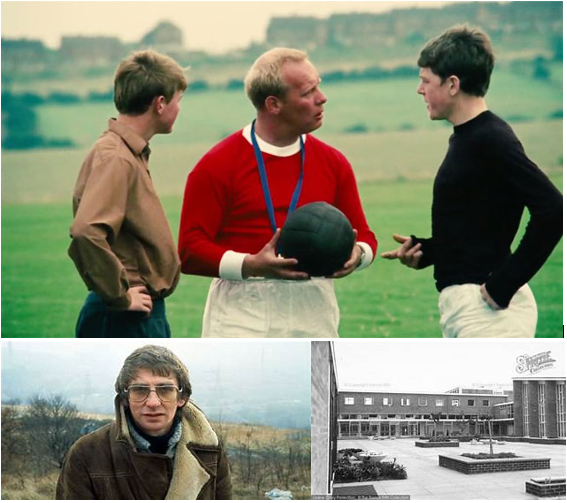
If you’ve ever shivered on a muddy school field while a PE teacher barked orders, you’ve lived a Barry Hines story. In his masterpiece A Kestrel for a Knave (and the iconic film Kes), Hines penned the most famous football scene in cinema history.
He gave us Mr. Sugden, the PE teacher who wasn’t just a coach, but a man trapped in a Manchester United kit and a personal fantasy. While the protagonist, Billy Casper, shivered in oversized shorts, Sugden lived out a Bobby Charlton daydream, commentating on his own “magnificent” goals. Hines didn’t invent this character from thin air; he drew from the grit and the “muck-and-nettles” reality of the fields he ran on at Loughborough and in the South Yorkshire coalfields.
The Team of Titans
Hines wasn’t the only one in that 1962 lineup destined for the history books; the Loughborough squad was a literal laboratory for future greatness. Standing tall in the back row, Bob Wilson would soon become a legendary Arsenal goalkeeper, keeping clean sheets for the 1971 Double-winning side before becoming the face of BBC’s Football Focus. Beside him, the future “Godfather of Crewe Alexandra,” Dario Gradi, was already developing the tactical mind that would later see him manage over 1,000 games and receive an MBE for his services to football.
Though less of a household name to the average fan, Ted Powell became a titan of coaching, leading the England Under-18s and shaping the early careers of Manchester United’s “Class of ’92″—including stars like Paul Scholes and the Neville brothers. Keith Blunt took the “Loughborough way” abroad, finding success coaching at Malmö FF in Sweden and later serving as a respected coach at Tottenham Hotspur. Finally, the team captain Alan Bradshaw, who led this group of future icons, went on to have a successful professional career at Crewe Alexandra, proving the 1962 squad was as much about professional talent as it was about future management.
A Legacy Beyond the Final Whistle
What makes the 1962–1963 Loughborough team so special is the intersection of high-level sport and intellectual pursuit. It was at Loughborough that a friend gave Barry Hines a copy of George Orwell’s Animal Farm—the first book he ever read for pleasure.
That single moment, occurring in the same years he was playing alongside Bob Wilson and Dario Gradi, sparked the literary fire that gave us Kes. The same discipline required to win the FA Centenary Trophy was channelled into a career that gave a voice to the Northern working class. Today, when we watch Kes, we see the comedy and the tragedy of the school football match. But when we look at that 1962 photo, we see where that insight was forged: on a pitch shared by the men who would go on to define the English game for the next fifty years.