
The British summer of 1887 was dominated by two things: Queen Victoria’s Golden Jubilee and the undisputed reign of cricket. But on a damp Tuesday evening in July, the town of Leicester bore witness to a fascinating, cross-sport experiment that proved the rising phenomenon of “Association Football” could captivate a crowd, even in the dead of the cricket season.
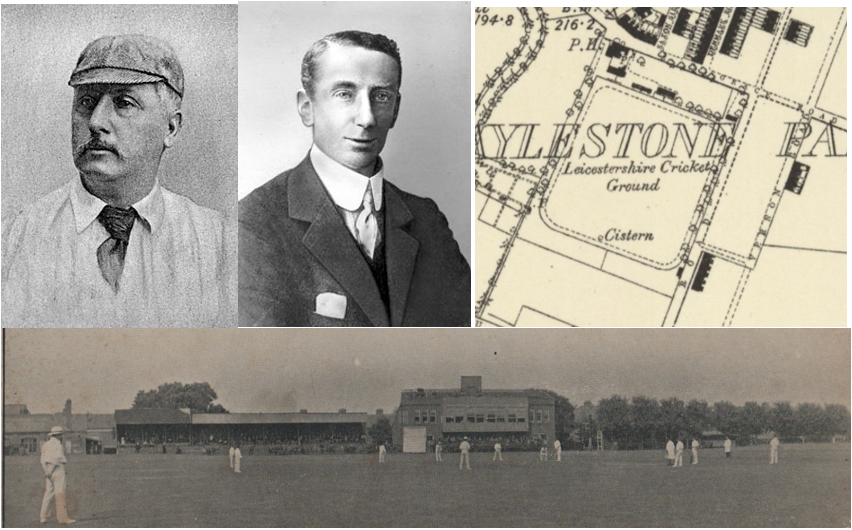
As part of the town’s highly anticipated Annual Cricket Week, organisers decided to throw a massive curveball to the spectators. Billed as an “additional attraction,” a unique exhibition match was arranged at the newly developed Aylestone grounds on Tuesday evening, pitting a hand-picked squad of local Leicester stalwarts against the formidable, travelling R. Daft’s Team (pictured left).
Breaking with Sacred Tradition
To understand what a radical departure this was, one only has to look at the history of Leicester’s previous Cricket Weeks. Traditionally, these weeks were the absolute pinnacle of the summer social calendar—sacred ground where football, a rough winter pastime, never dared tread.
In years past, if organizers wanted to spice up the cricket schedule, they relied on prestigious, multi-day first-class matches against powerhouse neighboring counties like Nottinghamshire or Yorkshire. On grand occasions, they even hosted international spectacles against the visiting Australian national side, which could draw upwards of 30,000 spectators over three days.
When the town wanted lighter entertainment, they turned to theatrical novelty games like “Married vs. Single” or “Gentlemen vs. Players,” or they converted the outfield into an athletics track for hundred-yard dashes and sack races. The evenings always concluded with high-society flair, featuring brass bands, smoking concerts, and grand public dinners lasting late into the night.
But by 1887, a shift was in the air. The mastermind behind the local selection, Mr. D. McAlpin, saw an opportunity to break from the usual brass bands and cricket drills. He scrambled to assemble a Leicester football side capable of holding their own against a visiting titan, gambling that the town’s appetite for the winter game was fast becoming a year-round obsession.
A Clash of Icons: Daft and Lindley
The visiting squad, managed by H. R. Daft—a member of the famous Nottinghamshire cricketing and footballing dynasty—carried immense prestige and was built for pure athletic entertainment. But it was another name in the lineup that had the Leicester crowd buzzing with electricity: Dr. Tinsley Lindley (pictured right).
Lindley was the ultimate Victorian sporting hero. A qualified lawyer and a genuine superstar of the era, he was the reigning English international centre-forward. Known for his blistering pace and an unusual quirk—he famously refused to wear traditional football boots, opting instead for standard running shoes because he claimed they gave him a better grip—Lindley was the man everyone had come to see.
Drama on the Aylestone Turf
Because this was a historic exhibition squeezed into a packed, traditional cricket itinerary, the match was a frantic, hyper-fast affair. The teams agreed to play just 20 minutes each way, an intense format that kept the enthusiastic local crowd on the edge of their seats.
From the opening whistle, the pace was relentless. The local Leicester boys fought valiantly under McAlpin’s guidance, setting up a rigid defensive wall. Yet, it was the sheer elegance of the visitors that stole the breath of the spectators, offering something entirely different from the slow, methodical cricket matches played earlier in the week.
The crowd witnessed what reporters described as “some right pretty play.” Dr. Tinsley Lindley did not disappoint. Weaving through the muddy Leicester defence with effortless grace, his clever tactics and masterful ball control drew roaring cheers from the grandstands.
Just as the match was reaching its fever pitch, the unpredictable British summer intervened. A sudden, heavy downpour opened up over Aylestone. With the pitch quickly turning into a quagmire and only a few minutes left on the clock, rain stopped play, and the referee was forced to call an early end to the proceedings.
When the whistle blew through the rain, R. Daft’s Team walked away with a narrow 1-0 victory courtesy of their star-studded frontline, while Mr. D. McAlpin’s brave Leicester XI went scoreless.
Yet, the real winner was the sport itself. In previous years, Cricket Week concluded with polite applause and predictable galas. In 1887, forty minutes of football hijacked the summer festival and left the rain-soaked crowd begging for more, marking a beautiful snapshot of a town falling head-over-heels for a new national obsession.