
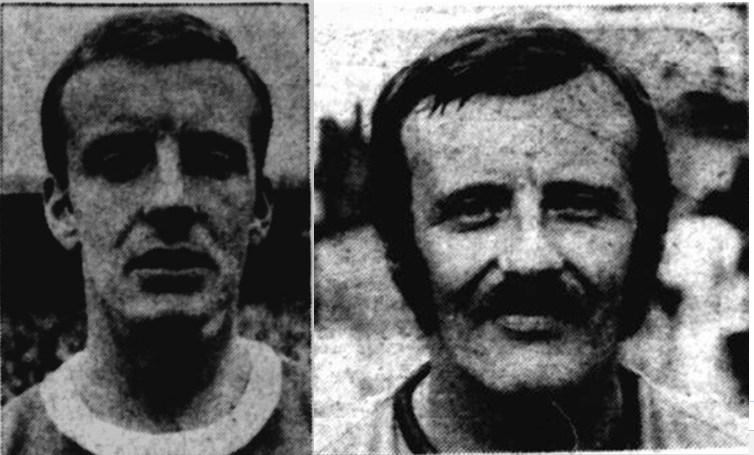
Michael Boot, born in Leicester in 1947, remains one of the most intriguing “what if” stories in the history of English football. A standout talent from a young age, he attended Hamilton School in Scraptoft. Boot’s own elite performances earned him that same prestigious England Schoolboy international cap, a title that marked him as one of the top prospects of his generation.
This early promise led him to Highbury, where he became a cornerstone of Arsenal’s youth setup during the mid-1960s. He played in two FA Youth Cup finals, most notably winning the trophy in 1966. That final saw the “Young Gunners” face off against Sunderland in a hard-fought two-legged encounter. After losing the first leg 2–1 at Roker Park—where Dave Simmons scored Arsenal’s lone goal—the team mounted a thrilling comeback in the second leg at Highbury. In front of a home crowd, Arsenal dominated with a 4–1 victory to secure a 5–3 aggregate win. The goals that night came from Andrew Milne, Dave Simmons, Neil Leven, and Micky Boot himself, who stepped up when it mattered most. Boot was a vital part of that legendary squad, playing alongside future stars such as Pat Rice, Sammy Nelson, and John Radford, as well as teammates Ernie Adams, Tommy Youlden, Ian Gillibrand, John Woodward, Trevor Rhodes, Robert Bristow, and Gordon Cumming.
His transition to the senior squad was brief but remarkably efficient. In October 1966, Boot made a dream league debut for the Gunners, scoring in a 2–0 victory over Newcastle United. He holds a nearly unmatched strike rate for a midfielder, ending his senior Arsenal career with a total of two goals in just four appearances. Despite this clinical start, his path took an unexpected turn away from the limelight of the First Division. In March 1967, Boot opted for a nomadic career that saw him travel the globe. He first moved to South Africa to play for Port Elizabeth City, where he helped the club secure a National Football League title, before returning for a stint in the English non-league circuit with clubs like Nuneaton Borough and Kidderminster Harriers.
He eventually settled in Australia, contributing significantly to the soccer scene in New South Wales and Queensland. He played for several clubs, including Townsville, Mareeba, and Phoenix, before transitioning into a coaching role where he led Lake Macquarie. Beyond the technical area, Boot built a diverse life away from the pitch, working for major companies like British Oxygen, Fosters Wine Estates, and later Port Waratah Coal Services in Newcastle, NSW. He remains a cult figure for Arsenal historians—a schoolboy star from Linwood who reached the pinnacle of Highbury, left his mark on the scoresheet alongside future legends, and then traded the English rain for a life of coaching and adventure abroad.
Boot’s own elite performances earned him his England Schoolboy international honours, most notably representing his country at the Under-15 level during the 1962–63 season. During this time, he was part of a successful England side that won the Victory Shield for the first time since 1960, a victory secured in a decisive match against a Scotland team that featured future Leeds United legend Eddie Gray.
A crowning moment of his youth career occurred on May 17, 1963, in a schoolboy international against the Republic of Ireland (Eire). Playing in front of 7,000 fans at Filbert Street—the home of his hometown club, Leicester City—Boot helped lead England to a 3–2 victory. The England lineup that day included H. Haggis, W. Hinton, M. Booker, J. Hart, E. Curwen, D. Grant, R. Wosahlo, R. Bradley, W. Baker, and R. Roach. During this period, Boot was also part of the successful side that reclaimed the Victory Shield for the first time since 1960.