
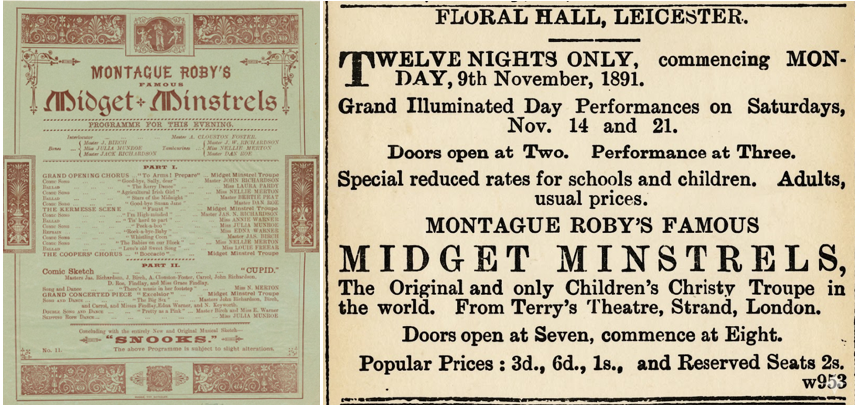
November 1891. The air in Leicester was crisp, smelling faintly of coal smoke, damp wool, and the distinct, rising fever of Association Football. Local sports fans were in a bit of a sour mood. The town’s headline club, Leicester Fosse), had just upset cricket purists by moving their home matches to the Aylestone Road Cricket Ground while they waited for their new home on Walnut Street—a little plot of land we now remember fondly as Filbert Street—to be finished. It was a chaotic, frustrating season for local sports fans. Away teams frequently arrived late due to train delays, forcing matches to be cut short in the creeping winter darkness, or worse, failed to show up entirely without warning, leaving assembled crowds cold and disappointed.
But for four days that November, the logistical headaches of the Midland League were completely eclipsed by a traveling phenomenon. It didn’t arrive with the standard, rugged grit of the era’s typical players. Instead, it arrived with showmanship, vibrant colour, and a whirlwind of pure novelty.
To understand why thousands of people packed into local grounds to see the Minstrels, you have to look at the landscape of late-Victorian entertainment. Football was rapidly growing into the working-man’s religion, but it frequently shared its weekends with music halls, traveling circuses, and theatrical troupes.
Inevitably, the two worlds smashed together. “Novelty” exhibition matches were wildly popular. Troupes like Montague Roby’s Famous Midget Minstrels—predominantly made up of highly trained, astonishingly athletic older children and teenagers who performed in pantomimes and variety shows across Great Britain—realised they could draw massive crowds by challenging local sports clubs to exhibition matches.
They weren’t just a gimmick, either; these kids were billed as “phenomenally talented” and “trained to perfection.” When they swapped their stage costumes for heavy leather boots and woollen jerseys, they revealed a level of technical coordination that genuinely caught local defences off guard.
The Minstrels’ schedule in Leicester was nothing short of gruelling. Operating with strict theatrical precision, the troupe lined up four games in four days during their 12-day stint at the Floral Hall, against a rotating cast of Leicester-based junior sides, factory teams, and amateur community selections. Because sports journalists of the era treated these matches as variety spectacles rather than competitive fixtures, formal league scorelines have faded into the margins of old library microfilms. However, the sheer atmospheric detail preserved in local archives paints a vivid picture of the spectacle.
The matches were played across open municipal fields and cricket pitches. The visual contrast on these fields was stark. While the local Leicester teams trudged out in heavy, dark wool jerseys, the Minstrels took the pitch in vibrant, theatrical stage kits specifically designed to pop against the grey autumn fog. The gameplay itself was an outright exhibition of skill versus size. Local Leicester teams of the 1890s played a bruising, highly physical game that usually relied on charging the goalkeeper and booting a heavy, laced leather ball through the mud. The Minstrels countered this brute force with rapid, synchronised short-passing, using their agility to dance completely around the lumbering adult defenders. The entertainment didn’t stop when the whistle blew, either; the games were inherently theatrical. Managed by the famous Victorian entertainment impresario Montague Roby, the troupe would frequently perform music hall songs and choreographed routines right on the pitch before kick-off and during halftime to keep the crowd captivated.
The 1891 tour of the Midget Minstrels captures a beautiful, transitional moment in English football history. It was a time when the sport was still malleable enough to double as a music-hall variety act, yet structured enough to draw thousands of passionate families and theatre goers to a muddy cricket field.
Shortly after the Minstrels packed up their kit bags and hopped on a steam train to their next theatrical booking, Leicester Fosse finally moved into their permanent home at Walnut Street, drawing a 1-1 draw against a Notts Forest reserve team in front of a roaring home crowd. The era of the hyper-professional, stadium-bound modern club was officially beginning.
But for four days in the autumn of 1891, the beautiful game belonged to the traveling showmen—proving that long before the days of multi-million-pound stadium light shows, football was always meant to be an entertainment business.