
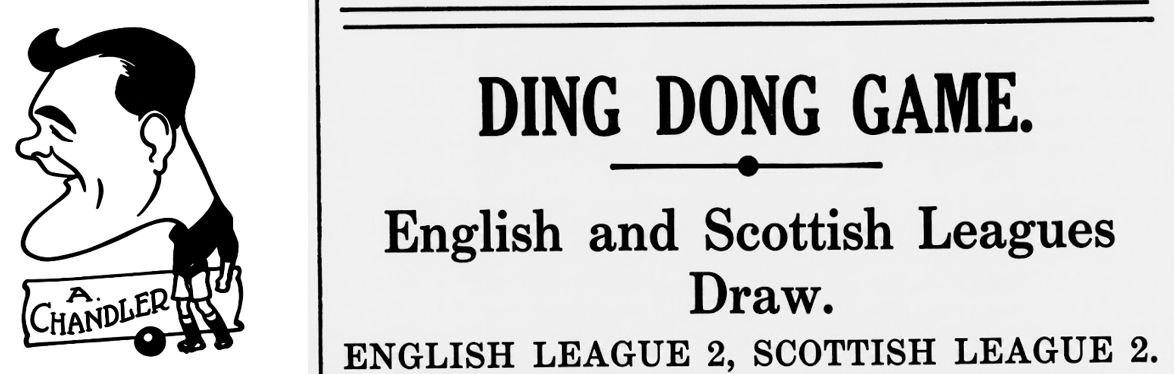
In the long history of Leicester’s Filbert Street, few afternoons rival the prestige of September 21, 1927. It was a day that the ground played hosted an Inter-League Match—a fiercely contested representative clash between the best players of the English and Scottish Football Leagues.
For the local fans, the game was a celebration of their own hero, Arthur Chandler. To this day, “Channy” remains the greatest goalscorer in Leicester City history with 273 goals, and this match served as a rare moment of national recognition for a player famously overlooked by the England senior selectors.
A Century of Rivalry: The Inter-League History
Before the advent of European club competitions, the Inter-League series was the “Super League” of its day. Starting in 1892, these matches were designed to settle the debate over which league played the superior brand of football. The English League (EFL) and Scottish League (SFL) met annually, alternating venues between the two countries. While technically “representative” games, they were played with the intensity of a cup final and were often used as trials for the full international squads. Over 75 matches between 1892 and 1976, the English League held a significant advantage with 42 wins to Scotland’s 19, though the Scottish side often boasted a more technical, “short-passing” style that captivated the large crowds.
The 1927 Showdown at Filbert Street
By 1927, Leicester was established as a footballing powerhouse, eventually finishing third in the First Division that season. Filbert Street was chosen to host the annual clash, and the timing was perfect as the “Filberts” were in their golden era.
The Official Lineups
English Football League (White Shirts) GK: Ted Hufton (West Ham United) RB: Warney Cresswell (Sunderland) LB: Frank Hudspeth (Newcastle United) RH: Billy Felton (Sheffield Wednesday) CH: George Wilson (Sheffield Wednesday) LH: Henry Healless (Blackburn Rovers) OR: Dick Richards (Wolverhampton Wanderers) IR: Billy Walker (Aston Villa) CF: Arthur Chandler (Leicester City) IL: Jimmy Seed (Sheffield Wednesday) OL: Billy Smith (Huddersfield Town)
Scottish Football League (Blue Shirts) GK: Jock Britton (Dundee) RB: Dougie Gray (Rangers) LB: Bob Hamilton (Rangers) RH: Bobby Main (Rangers) CH: Jimmy Meiklejohn (Rangers) LH: Tully Craig (Rangers) OR: Willie Devlin (Cowdenbeath) IR: Bob McPhail (Airdrieonians) CF: Jimmy McGrory (Celtic) IL: Alex James (Derby County) OL: Alan Morton (Rangers)
The match ended in a thrilling 2–2 draw in front of 26,000 spectators. Under a grey Leicester sky and heavy rain, the Scottish League mastered the slick surface early on. Their intricate passing game, led by the diminutive genius Alex James and the “Wee Blue Devil” Alan Morton, carved through the English midfield. This early pressure resulted in a goal from Bob McPhail to put the visitors ahead.
England struggled to find their rhythm until the Filbert Street crowd began to rally behind Chandler. The local hero’s physical presence forced the Scottish defence into several desperate clearances. Just before the break, a sweeping move involving Billy Walker allowed Jack Elkes, who came on as a substitute for the injured Seed, to fire home the equaliser.
The second half became a duel between the two greatest strikers of the age: Chandler and Jimmy McGrory. McGrory, the Celtic legend, showed his predatory instincts by rising highest to head home a cross from Morton, putting the Scots 2–1 up. However, the final twenty minutes belonged to England. Chandler’s tireless running and link-up play kept the Scottish defence under siege. In the dying embers of the match, Billy Walker of Aston Villa found a pocket of space and unleashed a powerful drive to make it 2–2.
The Leicester Legacy
For the people of Leicester, the 1927 match was a rare moment of international-level prestige. Arthur Chandler never received the full England cap his prolific scoring deserved, making this Filbert Street appearance the highest honoUr of his career. He proved that afternoon that he could lead the line against the best defenders in Britain, cementing his status as a true king of Filbert Street.